India’s ERP Shift 2026: Why Businesses Are Rapidly Moving to Cloud ERP Solutions?
 Admin
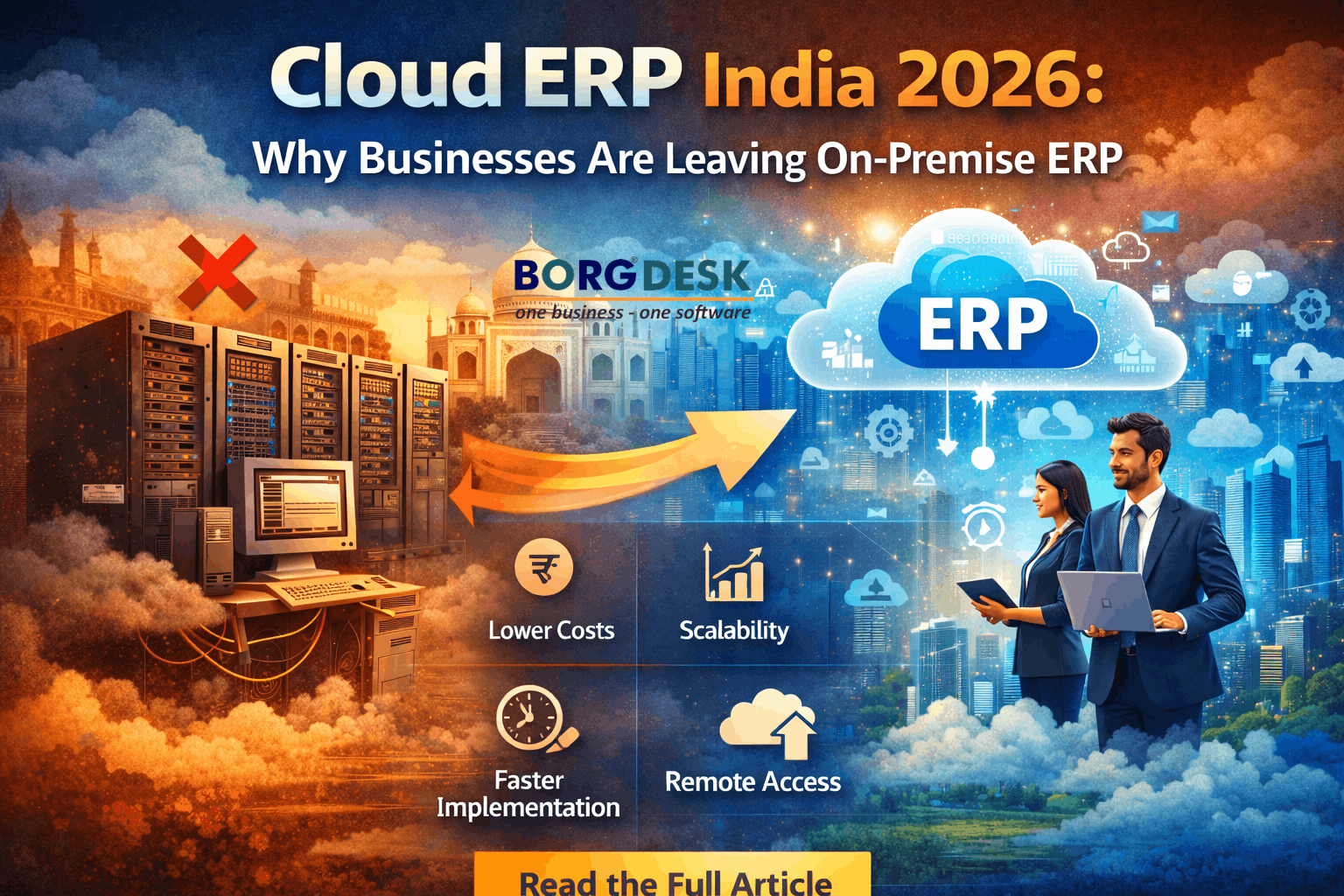
Admin Cloud ERP India 2026: Why Businesses Are Leaving On-Premise ERP?
The ERP market in India is undergoing a massive transformation in 2026. With rapid digitalization and increasing competition, businesses are moving away from traditional systems toward smarter solutions. One of the biggest shifts is the growing adoption of Cloud ERP in India 2026, replacing outdated on-premise ERP systems.
Organizations today demand flexibility, scalability, and real-time insights—something legacy ERP systems struggle to provide. As a result, cloud ERP growth is accelerating across industries, from SMEs to large enterprises.
In this blog, we’ll explore why businesses are making this shift, the benefits of cloud ERP, and how it compares to on-premise ERP systems.
What is Cloud ERP?
Definition and Key Features
Cloud ERP is a cloud-based ERP system hosted on remote servers and accessed via the internet. Unlike traditional software, it does not require physical installation on local machines.
Key features include:
- Real-time data access
- Automatic updates
- Remote accessibility
- Subscription-based pricing
How Cloud ERP Works
Cloud ERP software operates on a centralized platform where all business data is stored securely in the cloud. Employees can access the system from anywhere, enabling seamless collaboration and faster decision-making.
What is On-Premise ERP?
Traditional ERP Explained
On-premise ERP (Enterprise Resource Planning) systems are software solutions that are installed and run on computers located within the physical premises of an organization. These systems are managed, maintained, and updated by the organization's internal IT staff. Unlike cloud-based ERP solutions, on-premise ERPs provide companies with greater control over their data, security, and customization options. However, they typically require a larger initial investment in hardware, software, and ongoing IT resources. This traditional approach was widely used before cloud technology became mainstream.
Limitations of On-Premise ERP Systems
While effective in the past, on-premise ERP comes with several drawbacks:
- High upfront costs
- Limited scalability
- Complex maintenance
- Lack of remote access
These limitations are driving businesses toward cloud-based solutions.
Cloud ERP vs On-Premise ERP in India 2026
Cost Comparison
Cloud ERP operates on a subscription model, reducing upfront investment. In contrast, on-premise ERP requires heavy capital for infrastructure, licensing, and maintenance.
Scalability and Flexibility
Cloud ERP allows businesses to scale operations easily, while on-premise systems require costly upgrades.
Security and Data Access
Modern cloud ERP systems offer advanced security measures such as encryption and multi-factor authentication. Data can be accessed anytime, anywhere.
Implementation Time
Cloud ERP can be deployed quickly, often within weeks, while on-premise ERP implementation can take months or even years.
Why Businesses in India Are Moving to Cloud ERP
Lower Operational Costs
One of the biggest reasons for cloud ERP adoption in India is cost efficiency.
Remote Accessibility & Mobility
With remote work becoming the norm, cloud ERP enables employees to access data from anywhere.
Faster Implementation
Companies can implement cloud ERP quickly and start seeing results faster compared to traditional systems.
Real-Time Data & Insights
Cloud ERP provides real-time analytics, helping businesses make informed decisions.
Government Push for Digital Transformation
India’s push toward digitalization is encouraging companies to adopt cloud technologies, further boosting ERP market India 2026 growth.
Cloud ERP Growth in India 2026 (Market Trends)
Adoption Across SMEs and Enterprises
Both small businesses and large enterprises are adopting cloud ERP due to its affordability and scalability.
Industry-Wise ERP Adoption
Industries such as manufacturing, retail, logistics, and healthcare are leading the adoption of cloud ERP solutions.
Future Predictions
The future of ERP in India is cloud-driven. Experts predict that cloud ERP will dominate the market as businesses prioritize agility and innovation.
Challenges of Moving from On-Premise to Cloud ERP
Data Migration Issues
Migrating data from legacy systems to the cloud can be complex and requires careful planning.
Change Management
Employees may resist adopting new systems, making training and onboarding essential.
Choosing the Right ERP Vendor
Selecting the right ERP provider is critical for successful implementation and long-term growth.
How to Choose the Right Cloud ERP for Your Business
Key Features to Look For
Look for features such as automation, reporting, integration, and user-friendly interfaces.
Customization & Integration
Ensure the ERP system can be customized to meet your business needs and integrate with existing tools.
Pricing & Support
Evaluate pricing models and ensure reliable customer support is available.
Conclusion
The shift from on-premise to cloud ERP is no longer optional—it’s essential for businesses aiming to stay competitive in 2026. With benefits like cost savings, scalability, and real-time insights, Cloud ERP in India 2026 is transforming how organizations operate.
As the ERP market in India continues to evolve, businesses that embrace cloud technology early will gain a significant competitive advantage.
If you're looking to streamline operations and accelerate growth, now is the time to adopt a powerful cloud ERP solution.
FAQs
Q1: What is Cloud ERP and how is it different from on-premise ERP?
Cloud ERP is hosted online and accessible via the internet, while on-premise ERP is installed locally on company servers.
Q2: Why are businesses in India shifting to Cloud ERP in 2026?
Businesses are adopting cloud ERP due to lower costs, scalability, remote access, and faster implementation.
Q3: Is Cloud ERP secure for businesses in India?
Yes, cloud ERP systems use advanced security technologies like encryption and secure data centers.
Q4: What are the main benefits of Cloud ERP?
Key benefits include cost savings, flexibility, real-time insights, and easy scalability.
Q5: Can small businesses in India use Cloud ERP?
Yes, cloud ERP is ideal for SMEs due to its affordability and ease of use.
Leave your thought here
Your email address will not be published. Required fields are marked *


Comments (0)