How Retailers Are Increasing Sales and Fixing Inventory Issues with CRM & ERP Systems
 Admin
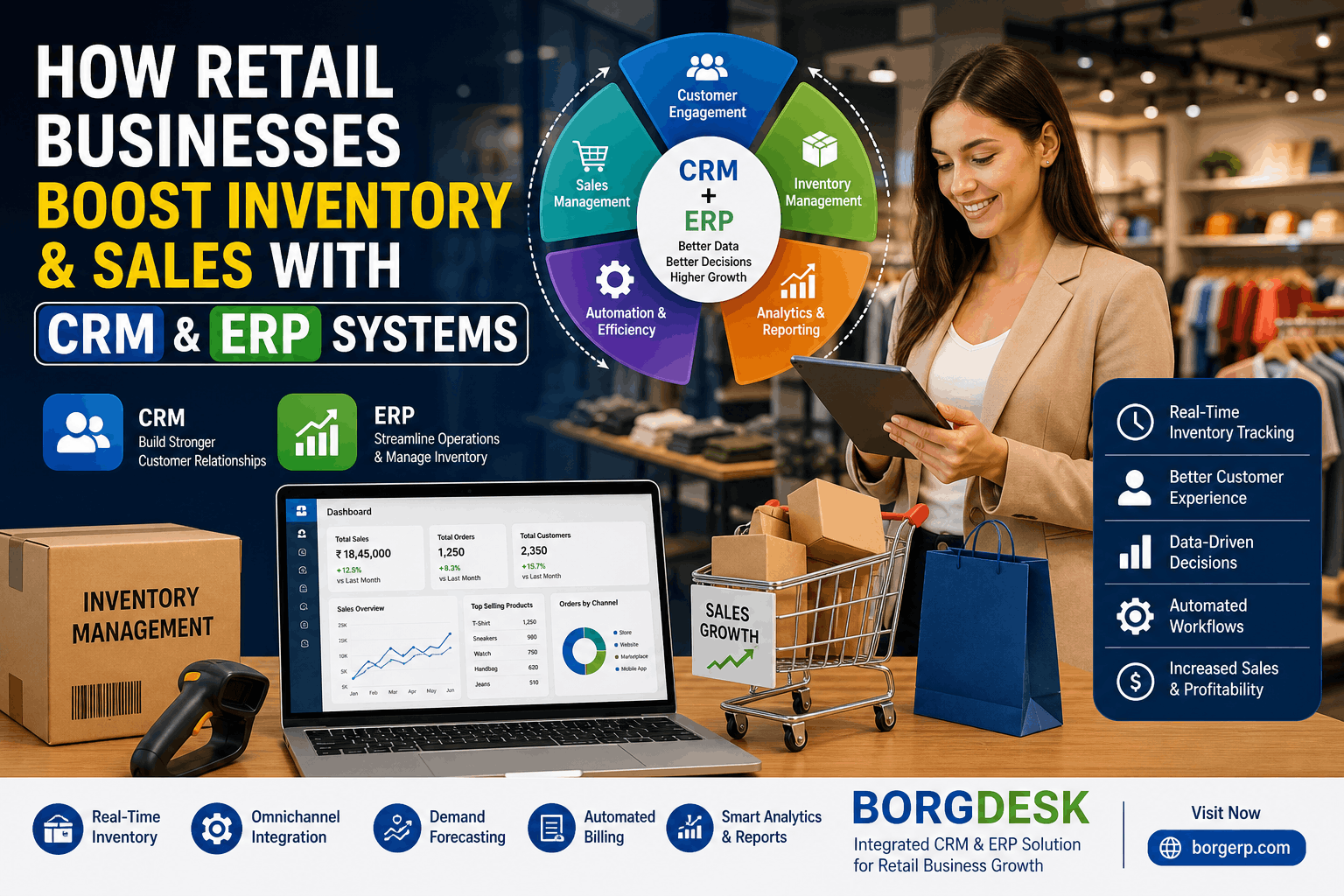
Admin How Retail Businesses Boost Inventory & Sales with CRM and ERP Systems
In today’s competitive retail landscape, businesses must move faster, smarter, and more efficiently than ever before. Managing inventory, tracking customer behavior, and increasing sales are no longer separate tasks—they are deeply interconnected. This is where CRM (Customer Relationship Management) and ERP (Enterprise Resource Planning) systems become powerful tools for retail success.
Retailers who adopt CRM and ERP systems are seeing significant improvements in inventory accuracy, customer satisfaction, and revenue growth. In this comprehensive guide, you’ll discover how retail businesses boost inventory and sales using these technologies—and how your business can do the same.
Why Retail Businesses Need CRM and ERP Systems?
Retail operations involve multiple moving parts: inventory, suppliers, sales channels, customer data, billing, and more. Without proper integration, these processes become inefficient and error-prone.
Key Challenges Retailers Face:
- Overstocking or understocking products
- Poor demand forecasting
- Disconnected sales and customer data
- Inefficient order management
- Lack of real-time insights
By implementing CRM and ERP software for retail, businesses can centralize operations, automate workflows, and make data-driven decisions.
What is CRM in Retail?
A Retail CRM system helps businesses manage customer interactions, track buying behavior, and improve engagement.
Benefits of CRM for Retail:
- Personalized marketing campaigns
- Better customer retention
- Improved customer support
- Tracking customer purchase history
- Increased repeat sales
Example:
When a customer frequently buys a specific product, CRM allows retailers to send targeted offers—boosting conversions and loyalty.
What is ERP in Retail?
An ERP system for retail businesses integrates all core processes like inventory management, accounting, procurement, and supply chain operations into a single platform.
Benefits of ERP for Retail:
- Real-time inventory tracking
- Automated stock management
- Streamlined supply chain
- Accurate financial reporting
- Reduced operational costs
How CRM and ERP Work Together in Retail?
Individually, CRM and ERP are powerful. When together, they provide a unified habitat that promotes growth.
Key Integrations:
- CRM captures customer data → ERP processes orders
- ERP updates inventory → CRM informs customers
- Sales data from ERP → CRM improves marketing strategies
This integration ensures seamless retail operations, better customer experiences, and improved decision-making.
1. Real-Time Inventory Management
One of the biggest advantages of ERP is real-time inventory visibility.
How It Helps:
- Tracks stock levels across multiple locations
- Reduces stockouts and overstocking
- Automates reorder processes
With accurate inventory data, retailers can ensure that popular products are always available—leading to increased sales.
2. Demand Forecasting & Smart Stock Planning
ERP systems forecast future demand using analytics and previous data.
Benefits:
- Better stock planning
- Reduced wastage
- Improved seasonal sales strategy
Retailers can prepare for peak seasons and avoid unnecessary inventory costs.
3. Personalized Customer Experience with CRM
Modern customers expect personalized experiences. CRM makes this possible.
How CRM Boosts Sales:
- Tracks customer preferences
- Sends personalized offers
- Automates email & SMS campaigns
Increased client loyalty and conversion rates are the results of personalization.
Visit: For SMS, Email & WhatsApp Services- “ www.leadofy.com”
4. Omnichannel Sales Integration
Retailers today sell across multiple platforms—offline stores, websites, and marketplaces.
ERP + CRM Enables:
- Unified sales data across channels
- Consistent pricing and inventory
- Better order tracking
This ensures a smooth shopping experience for customers, regardless of where they buy.
5. Automated Order and Billing Process
Manual processes slow down operations and increase errors.
ERP Automation Features:
- Automatic invoice generation
- Order tracking
- Payment reconciliation
Benefits:
- Faster order processing
- Reduced human errors
- Improved customer satisfaction
6. Data-Driven Decision Making
Both CRM and ERP provide powerful analytics and reporting tools.
Insights You Get:
- Best-selling products
- Customer buying patterns
- Sales performance
Retailers can use these insights to optimize pricing, promotions, and inventory.
7. Improved Supplier and Supply Chain Management
ERP systems streamline supplier relationships and procurement processes.
Benefits:
- Faster procurement cycles
- Better supplier coordination
- Reduced delays
This ensures timely product availability and better inventory flow.
Also Read: “Top Benefits of ERP for Growing Businesses.”
8. Increased Sales Through Better Marketing
CRM systems enable targeted marketing strategies.
Marketing Features:
- Email automation
- Customer segmentation
- Campaign tracking
Retailers can focus on high-value customers and maximize ROI.
Also read: “Best Sales CRM Software to Boost Your Pipeline.”
Why Choose BORGDESK for Retail CRM & ERP?
If you’re looking for a powerful, all-in-one solution, BORGDESK is designed specifically to help retail businesses grow.
What Makes BORGDESK Stand Out:
- Integrated CRM and ERP platform
- Real-time inventory tracking
- Advanced analytics and reporting
- Easy-to-use dashboard
- Customizable for retail businesses
Visit now: https://borgerp.com
With BORGDESK, you can streamline operations, improve customer relationships, and significantly boost your sales.
Best Practices for Retail CRM and ERP Implementation
1. Choose the Right Software
Select a solution tailored for retail needs like BORGDESK.
2. Train Your Team
Make sure staff members know how to operate the system efficiently.
3. Integrate All Channels
Connect POS, eCommerce, and warehouse systems.
4. Monitor Performance
Use analytics to track improvements and ROI.
Future Trends in Retail CRM & ERP
Retail technology is evolving rapidly. Here are some trends to watch:
- AI-powered demand forecasting
- Cloud-based ERP systems
- Mobile CRM solutions
- Automation and chatbots
- Real-time customer insights
Adopting these innovations will keep your business ahead of competitors.
Also Read: “Smart ERP Software for SMEs.”
Conclusion
Retail businesses can no longer rely on outdated systems and manual processes. By integrating CRM and ERP systems, retailers can:
- Improve inventory management
- Enhance customer experience
- Increase sales and profitability
- Make smarter business decisions
If you want to scale your retail business efficiently, investing in a powerful solution like BORGDESK is the right move.
FAQs
1. What is the difference between CRM and ERP in retail?
CRM focuses on managing customer relationships and sales, while ERP handles inventory, finance, and operations.
2. How do CRM and ERP improve inventory management?
ERP tracks stock in real-time, while CRM helps predict demand based on customer behavior.
3. Can small retail businesses use CRM and ERP?
Yes, modern solutions like BORGDESK are designed for small and medium-sized businesses.
4. Is CRM and ERP integration necessary?
Absolutely. Integration ensures seamless data flow and improves efficiency across departments.
5. How does CRM increase retail sales?
CRM enables personalized marketing, better customer engagement, and improved follow-ups—leading to higher conversions.
Leave your thought here
Your email address will not be published. Required fields are marked *

Comments (0)